How far will an electric unicycle go?
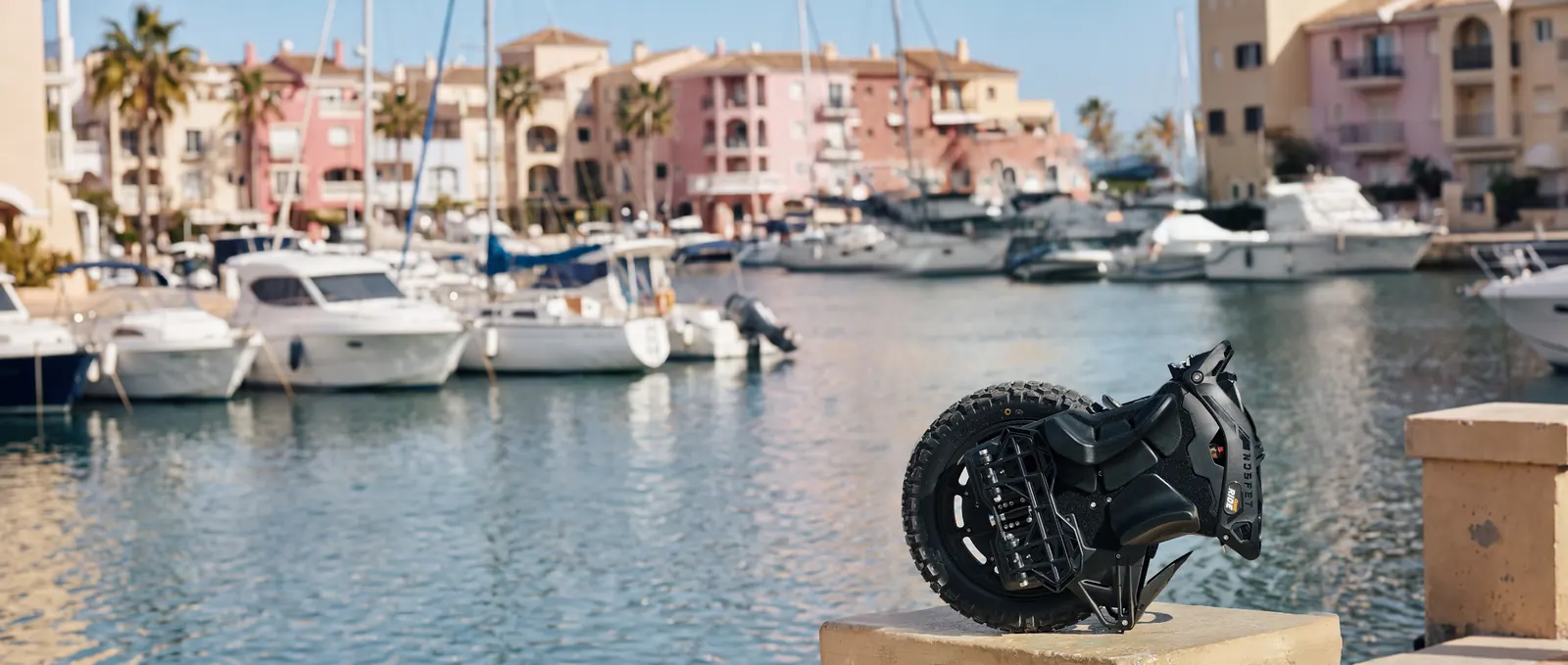
Official range figures are measured in gentle conditions: a set rider weight, a steady, moderate speed, flat ground and 25 °C. Your ride will not look like that. This guide turns battery size into a distance you can plan around, using the real-world figures reported for wheels in our range.

The one calculation
Range is energy divided by consumption. Battery capacity is in watt-hours (Wh); consumption is in watt-hours per kilometer (Wh/km). Divide the first by the second and you have a distance.
The hard part is the consumption figure, because it changes with you and the road. The rest of this guide is about finding a realistic one.
How official range is measured
Where makers publish the conditions behind their figures, they are gentle: a set rider weight, a modest speed, a flat road and a warm day.
| Wheel | Official range | Measured with |
|---|---|---|
| INMOTION E20 | 30 km | 70 kg rider, about 12 km/h, flat road, 25 °C |
| INMOTION V5F | 35 km | 70 kg rider, about 20 km/h, flat road, 25 °C |
| KingSong 14S PRO | 70 km | 70 kg rider, level road, 25 °C |
| INMOTION V12S | 120 km | 90 kg rider, 20–40 km/h, flat road, 25 °C |
| INMOTION V12 PRO | 155 km | 90 kg rider, 20–40 km/h, flat paved road, 25 °C |
| BEGODE Blitz Pro | 120 km | BEGODE quotes 120–160 km for a 70 kg rider |
What riders actually get
For several wheels we have a real-world figure, from the maker, a published review, a retailer, an owner or our own product page, as labeled. In the chart below it lands at roughly half to four-fifths of the official figure; one reviewer of the LeaperKim Sherman L matched its official 160 km.
Dividing each battery by its reported distance gives the energy those riders used per kilometer. Light wheels ridden at city pace use about 13 to 20 Wh/km; heavier wheels use about 22 to 30.
What speed costs
KingSong publishes two figures for the 16X PRO with the same 68 kg rider. Riding half as fast again takes more than a quarter off the distance.
If a route has to fit the battery, slowing down helps.
Weight, hills, cold and riding style
- Rider weight. Official tests use a 70 or 90 kg rider. A heavier rider, or a backpack, uses more energy for every kilometer.
- Hills. Climbing takes extra energy, so a hilly route needs a bigger margin than a flat one.
- Cold. Our product pages note shorter range in cold weather, and for the LeaperKim Sherman P that fast or cold riding cuts well into the stated 180 km.
- Riding style. For the NOSFET AEON (official 75 km), one owner reports 50 to 60 km at a moderate pace, while sellers quote 25 to 45 km for aggressive riding.
A planning table
Pick your battery, pick a consumption figure from the charts above, and read off a distance. The table uses 80% of the battery and keeps the last fifth in reserve, because a wheel's top speed falls as the battery drains and you want something left for the way home. If you do not know your own figure yet, use the one for a similar wheel in the chart above, or 25 to 30 Wh/km for a heavy wheel.
| Battery | 15 Wh/km | 20 Wh/km | 25 Wh/km | 30 Wh/km | 35 Wh/km |
|---|---|---|---|---|---|
| 240 Wh E20 | 15 km | 10 km | 10 km | 5 km | 5 km |
| 420 Wh 14D PRO | 20 km | 15 km | 15 km | 10 km | 10 km |
| 750 Wh V9 | 40 km | 30 km | 25 km | 20 km | 15 km |
| 1,110 Wh Aero, S18 PRO+ | 60 km | 45 km | 35 km | 30 km | 25 km |
| 1,500 Wh V11Y, C8, Rocket | 80 km | 60 km | 50 km | 40 km | 35 km |
| 1,776 Wh S19 PRO | 95 km | 70 km | 55 km | 45 km | 40 km |
| 2,220 Wh Patton S, S22 PRO+ | 120 km | 90 km | 70 km | 60 km | 50 km |
| 2,700 Wh Lynx S | 145 km | 110 km | 85 km | 70 km | 60 km |
| 3,000 Wh X-Way, Blitz Pro | 160 km | 120 km | 95 km | 80 km | 70 km |
| 4,000 Wh Sherman L | 215 km | 160 km | 130 km | 105 km | 90 km |
| 4,700 Wh Sherman P, ORYX | 250 km | 190 km | 150 km | 125 km | 105 km |
Once you own a wheel, measure your own consumption: note the battery used and the distance on a few normal rides, and plan from that. Do not run the battery flat to prove a range figure.
Charging time
Charging time is roughly the battery size divided by the charger's power, which is its voltage times its current. The LeaperKim Sherman L's 4,000 Wh on a 151.2 V, 5 A charger works out at about 5.3 hours; the product page says about 6.
Most larger wheels charge faster with more current, from chargers that are not in the box. A second 5 A charger brings the Sherman L to about 3 hours; with optional chargers the INMOTION V14 PRO reaches 80% in about an hour, and the INMOTION P6 does the same with its optional 14 A charger. To estimate the cost, multiply the battery size in kilowatt-hours by your electricity price and allow a little more for charging losses.
Wheels built for distance
For whole days out, the LeaperKim tourers carry the most energy. If the budget is tighter and your routes are mostly paved, the KingSong 18XL PRO covers long rides for far less money.
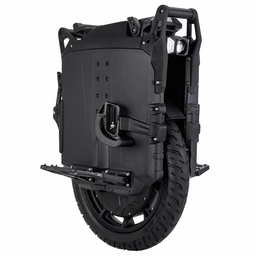
LeaperKim Sherman P
4,700 Wh on 176.4 V in the 20-inch format, up to 180 km stated, and a 150 kg rider limit.
- 4,700 Wh
- 52 kg
KingSong 18XL PRO
The lower-cost option: about 90 km of real riding from 1,554 Wh, on a tall 18-inch tire, at 25.4 kg.
- 1,554 Wh
- 25.4 kg
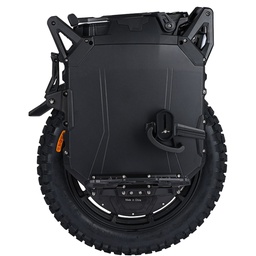
LeaperKim ORYX
4,700 Wh on a 22-inch tire; about 130 km is the conservative estimate on its page.
- 4,700 Wh
- 57 kg